Introduction
In modern packaging production, consistent quality defines a brand’s credibility. As paper bags replace plastic due to sustainability demands, businesses must ensure that their paper bags are not only eco-friendly but also durable, precisely shaped, and visually appealing. The efficiency and precision of production play a critical role in achieving these standards. A paper bag making machine transforms this process from manual, inconsistent crafting into automated, quality-controlled manufacturing—enhancing accuracy, reducing waste, and improving end-user satisfaction.
This article explores how paper bag making machines directly contribute to superior quality across every dimension of bag production, from design uniformity and strength to print precision and sustainability.
Automation Enhances Consistency and Precision
Manual production often leads to irregular dimensions, misaligned folds, and inconsistent glue application. In contrast, a paper bag making machine standardizes every step—from paper feeding and cutting to folding and sealing. Automation ensures that each bag meets exact specifications, maintaining uniformity across large production batches.
High-end machines use sensors and servo motors to control length, width, and thickness parameters with millimeter accuracy. This eliminates human error and provides precision impossible to achieve manually. Moreover, automated tension control prevents tearing during feeding, ensuring smooth, clean edges.
| Feature | Manual Production | Automated Paper Bag Making Machine |
| Dimension accuracy | Inconsistent | ±0.5 mm precision |
| Glue application | Irregular, wasteful | Uniform and controlled |
| Bag strength | Variable | Consistent across batches |
| Waste ratio | High | Minimal |
Quality Impact: Automation guarantees that every bag looks and performs identically, meeting brand and customer expectations consistently.
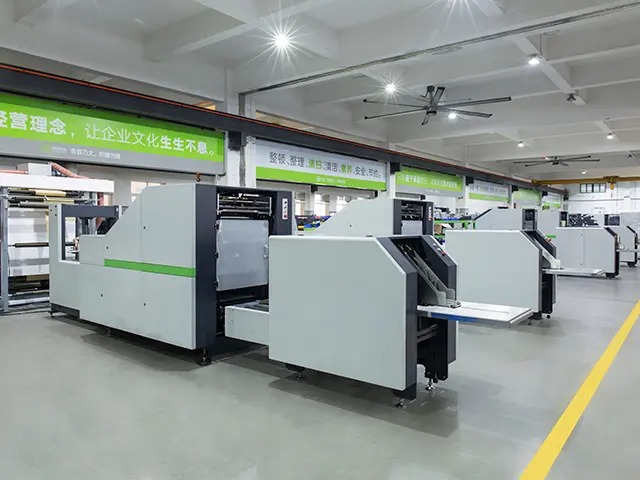
Improved Material Utilization and Waste Reduction
Paper quality is directly affected by how efficiently raw materials are used. Poor cutting or misalignment can waste valuable kraft paper sheets and compromise bag durability. A modern paper bag making machine integrates smart cutting systems and automatic tension controllers to optimize paper feed and minimize wastage.
These machines analyze roll width and adjust cutting length dynamically, ensuring optimal yield. Some models include automatic defect detection, rejecting damaged sections before they reach the folding stage. This precision reduces raw material consumption while maintaining consistent bag structure.
| Benefit | Description | Quality Outcome |
| Optimized cutting layout | Minimizes offcuts | Uniform edge finish |
| Tension control | Prevents tearing | Stronger bag structure |
| Automated defect removal | Filters out flawed paper | Only high-grade bags produced |
Quality Impact: Efficient material use not only reduces costs but also improves the physical strength and surface smoothness of every paper bag produced.
Consistent Glueing and Sealing for Durability
The strength of a paper bag lies in its bonding—particularly the accuracy of gluing and sealing. Uneven glue application causes weak joints that split under load. Modern paper bag making machines integrate precision gluing systems with adjustable nozzles, ensuring uniform adhesive distribution along seams and handles.
Some advanced models employ hot-melt adhesive systems with automated temperature control, which allows faster setting and stronger adhesion. Real-time glue flow monitoring prevents over- or under-application, maintaining consistent bonding even during high-speed production.
Key Improvements:
Uniform bonding: Prevents bag deformation under weight.
Accurate positioning: Ensures perfect handle and gusset alignment.
Longer shelf life: Bags remain sturdy during storage and transport.
Quality Impact: Enhanced sealing precision translates into stronger, more reliable bags that meet commercial load-bearing standards.
Enhanced Printing Accuracy and Brand Presentation
Quality isn’t limited to structural performance—it also extends to visual appeal. Paper bag making machines equipped with inline flexographic or offset printing systems ensure that colors, logos, and text appear sharp and accurately aligned. This consistency is critical for maintaining brand identity and professional presentation.
In manual or semi-automatic printing, ink bleeding and misregistration are common problems. However, integrated printing systems in modern machines feature color calibration sensors and digital registration control. These maintain print alignment within microns, even during long runs.
Printing Quality Advantages:
Crisp, high-resolution logos and images.
Uniform ink density across batches.
Faster production with minimal misprints.
Quality Impact: Clear, vibrant, and consistent print quality enhances perceived brand value and consumer trust.
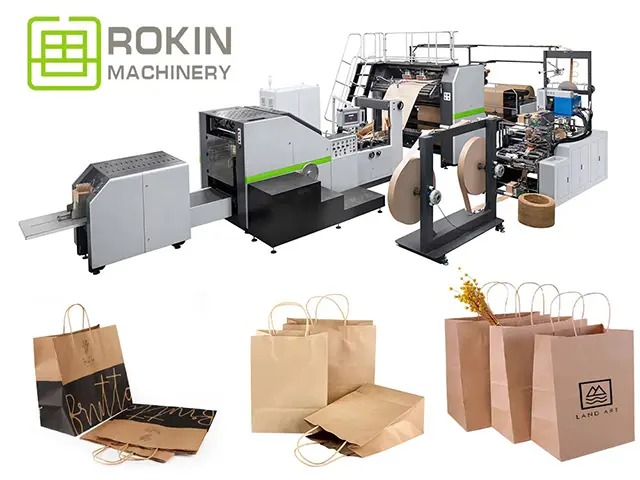
Better Quality Control through Smart Monitoring Systems
Quality control is no longer reactive—it’s proactive. Advanced paper bag making machines incorporate digital monitoring systems that track production parameters in real time. Through integrated PLC and HMI interfaces, operators can monitor glue levels, temperature, bag dimensions, and folding accuracy continuously.
If deviations occur, automated alerts or corrections are triggered instantly, reducing the chance of defective products. Some systems also log production data, enabling manufacturers to analyze trends and implement long-term quality improvements.
Examples of Smart Monitoring Functions:
Auto-stop for misfeed or paper breakage.
Defect detection through optical sensors.
Real-time bag count and parameter reporting.
Quality Impact: Continuous digital supervision guarantees that every bag leaving the line adheres to quality specifications, reducing rejection rates and boosting customer satisfaction.
Adaptability to Different Paper Types and Designs
A high-quality paper bag making machine can handle various paper grades—kraft paper, laminated sheets, art paper, or recycled stock—without sacrificing precision. This adaptability allows manufacturers to serve diverse markets, from retail boutiques to industrial packaging, while maintaining consistent quality.
Machine flexibility also extends to bag types: flat-bottom, square-bottom, handle bags, or window bags. Automated adjustments in cutting, folding, and gluing modules make switching between styles quick and error-free.
| Paper Type | Machine Capability | Quality Benefit |
| Recycled kraft paper | Supports variable thickness | Eco-friendly yet strong output |
| Laminated paper | Precision feeding | Smooth surface and print clarity |
| Coated paper | Controlled tension | Prevents cracking or wrinkling |
Quality Impact: The ability to process multiple paper types ensures uniformity across product lines while preserving quality for every application.
Energy Efficiency and Environmental Compliance
Quality production isn’t only about output—it also involves sustainable operations. Modern paper bag making machines are designed for low power consumption, efficient heat recovery, and minimal material waste. This combination reduces the carbon footprint of production while maintaining optimal quality.
Energy-efficient motors, automatic shutdown systems, and recycling modules contribute to both cost savings and environmental compliance. In regions where eco-label certifications are required, such sustainable machinery helps manufacturers meet regulatory standards without compromising on bag quality.
Quality Impact: Environmentally responsible production supports stronger brand reputation and aligns with global sustainability trends.
Reduced Human Error and Improved Productivity
Manual production depends heavily on operator skill, making it prone to fatigue-related errors. A paper bag making machine automates repetitive and precision-critical tasks, dramatically reducing the likelihood of mistakes. With fewer manual interventions, production flow remains stable, and defective output is minimized.
Furthermore, one operator can manage multiple machines simultaneously, improving efficiency without sacrificing oversight. Machines equipped with automatic counting and stacking systems streamline packaging, reducing handling damage.
Quality Impact: Lower human dependency ensures uninterrupted production of flawless bags, with reduced downtime and increased overall yield.
Conclusion
A paper bag making machine is more than a tool for mass production—it’s a system designed to elevate every aspect of quality. From precise cutting and consistent gluing to flawless printing and automated inspection, it ensures that each bag meets the highest standards of strength, aesthetics, and reliability. The transition from manual methods to smart automation not only enhances product quality but also drives sustainability and efficiency across the entire production line.
For businesses aiming to build a strong, eco-conscious brand presence, investing in a high-quality paper bag making machine is not just a technological upgrade—it’s a strategic move toward excellence.
FAQ
1. How does a paper bag making machine ensure uniform bag size?
Modern machines use servo-driven systems that precisely control the cutting and folding dimensions. This guarantees identical bag sizes across every batch, eliminating inconsistencies found in manual production.
2. Can these machines handle different paper thicknesses?
Yes. Advanced paper bag making machines are equipped with adjustable rollers and feeding systems that accommodate varying paper weights—from thin recycled kraft paper to thicker laminated stock—without affecting quality.
3. What role does automation play in improving bag strength?
Automation maintains consistent glue and fold pressure, resulting in stronger seams and structural integrity. This reliability enhances the bag’s load-bearing capacity and prevents tearing during use.
4. Are automated machines cost-effective for small businesses?
While initial investment is higher than manual setups, automated paper bag making machines reduce material waste, labor costs, and defect rates—offering significant long-term savings and better product quality.
5. How does integrated printing enhance quality control?
Inline printing ensures color accuracy, registration precision, and brand consistency. Automated sensors maintain uniform ink density, ensuring that every printed bag aligns perfectly with brand standards.

