Introduction
The evolution of paper bag making machines has reshaped how manufacturers select and use raw materials in packaging production. No longer is paper bag manufacturing limited to manual folding or simple kraft paper; modern machinery enables diverse material compatibility, precise customization, and sustainable resource use. As automation, digital control, and environmental policies continue to influence the packaging sector, the connection between machine technology and raw material selection has become more intricate. Understanding how a paper bag making machine influences the choice of paper grade, thickness, coating, and additives is now essential for cost efficiency, quality assurance, and sustainability alignment.
The Interdependence Between Machine Technology and Raw Material Properties
The relationship between a paper bag making machine and raw material choice begins with machine design and processing capabilities. Each machine model—whether flat-bottom, square-bottom, or handle-loop type—imposes specific mechanical demands on paper strength, flexibility, and texture. A machine optimized for high-speed output requires uniform grammage and moisture-controlled paper to ensure smooth feeding and folding. Conversely, semi-automatic machines can tolerate greater variability but may produce inconsistent finishes if the paper fiber quality is low.
| Machine Type | Required Paper Features | Common Paper GSM Range |
| Flat-bottom machine | High tensile strength, low porosity | 50–80 GSM |
| Square-bottom machine | Stiff texture, accurate thickness | 70–120 GSM |
| Handle-making machine | High tear resistance, strong fiber bonding | 90–150 GSM |
Choosing the right paper grade therefore depends not only on functional goals but also on whether the machine’s mechanical precision can accommodate that material’s physical behavior under tension, heat, and folding stress.
Automation Level and Its Impact on Material Tolerances
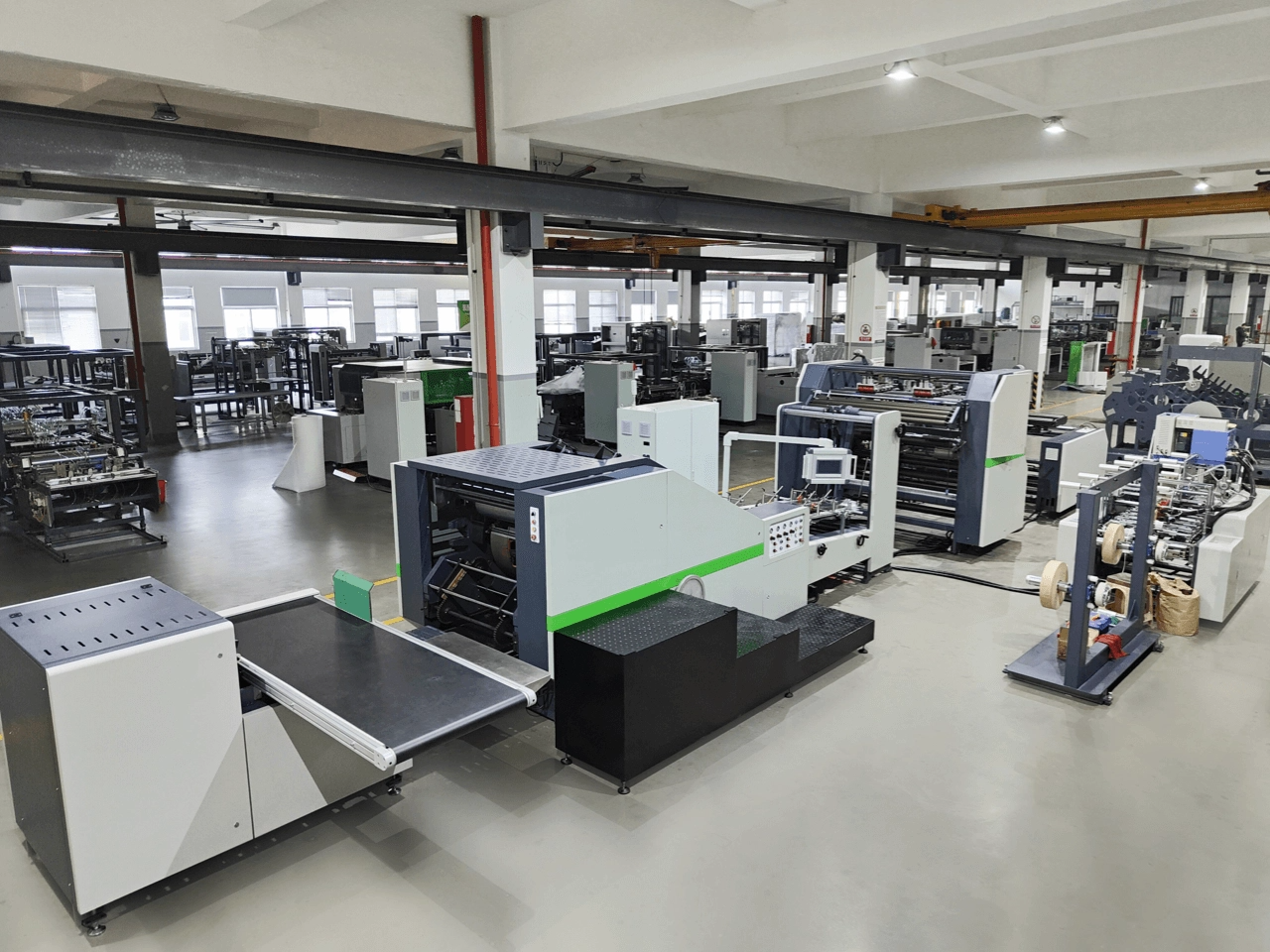
Automation is a decisive factor shaping the compatibility range of materials. A fully automatic paper bag making machine integrates servo controls, optical sensors, and PLC systems that demand consistent paper roll tension and thickness uniformity. Such machines can process thin kraft paper or recycled paper only if their moisture and fiber consistency meet machine specifications. Manual or semi-automatic models, on the other hand, provide flexibility in material feeding but require frequent adjustments and manual alignment to prevent wastage.
| Machine Automation Level | Material Flexibility | Output Quality | Wastage Risk |
| Fully automatic | Low (requires uniform paper) | High | Low |
| Semi-automatic | Moderate | Medium | Moderate |
| Manual | High | Low | High |
This demonstrates that the higher the automation level, the stricter the paper property requirements. Manufacturers seeking to leverage high-speed automatic models must invest in pre-treated or machine-compatible paper rolls, thus directly linking automation with raw material cost and sourcing strategy.
Influence of Machine Speed and Heat Generation on Paper Type
High-speed paper bag machines, operating at rates exceeding 200 bags per minute, create friction and heat that affect material stability. Excessive heat can cause thin paper to warp, while low-density fiber sheets may tear during folding. Therefore, the paper bag making machine’s speed profile determines optimal paper grammage and fiber blend composition. For example, when the machine includes a hot-melt adhesive unit, the chosen paper must have a heat tolerance above 150°C and minimal surface coating to ensure adhesion without burning.
Recommended Material Characteristics by Machine Speed
| Machine Speed (Bags/min) | Ideal Paper Type | Special Treatment Required |
| Below 100 | Recycled kraft, unbleached | Moisture adjustment |
| 100–200 | Virgin kraft, semi-coated | Edge trimming |
| Above 200 | Laminated or high-density kraft | Heat-resistant coating |
Thus, as machine performance increases, the demand for higher-quality, precision-treated paper becomes unavoidable. This correlation also influences procurement decisions and quality control systems across the production line.
Bag Design and Structural Complexity as Material Determinants
Different bag types—flat, gusseted, or twisted-handle—require materials with distinct mechanical characteristics. A paper bag making machine designed for square-bottom bags must work with stiffer paper to maintain shape after folding and gluing, while a machine for lightweight grocery bags benefits from flexible and lower-GSM materials. The type of handle, adhesive, or lamination unit integrated into the machine further affects the required paper tensile strength and bonding surface.
For instance, luxury shopping bags may require laminated or art-paper compatible machines, which limit the use of recycled fiber blends. In contrast, eco-friendly bag machines with water-based glue systems perform best with absorbent, uncoated kraft paper.
Example: Structural Requirements by Bag Type
| Bag Type | Typical Machine Function | Optimal Paper Features |
| Flat bags | Simple folding and cutting | Thin, smooth kraft |
| Square-bottom bags | Multi-fold, side gluing | High stiffness |
| Handle bags | Twisting & pasting | Strong fiber and elasticity |
This technical interplay shows how every machine configuration dictates not just the appearance of the final product but also the sustainability and sourcing of raw materials.
Sustainability and Machine Compatibility with Recycled Paper
As sustainability regulations tighten globally, manufacturers increasingly turn to recycled paper. However, the paper bag making machine must support this shift. Recycled paper often contains shorter fibers and inconsistent moisture levels, making it challenging for high-precision machinery to process without frequent jams or tearing. Advanced machines with adjustable feeding tension, pre-heating rollers, and static elimination systems can mitigate these issues, broadening the use of eco-friendly materials.
Additionally, newer models integrate automatic defect detection to compensate for recycled paper variability. While such machines require higher initial investment, they allow for long-term material cost reduction and regulatory compliance. Therefore, machine adaptability becomes a critical sustainability enabler in paper bag manufacturing.
Coating, Printing, and Surface Treatment Considerations
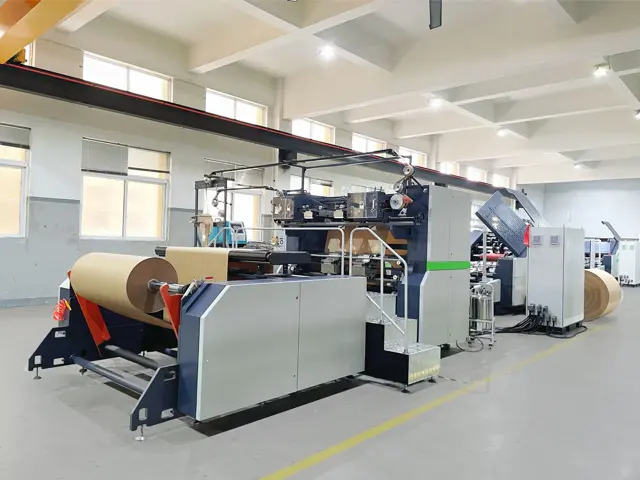
Many modern paper bag making machines incorporate printing, coating, or lamination modules. Each additional process step changes how raw material is chosen. For example, flexographic printing units require paper with a specific surface smoothness and ink absorbency to prevent smudging. Lamination units necessitate paper that can bond with polymer films without delamination or curling.
Paper smoothness, measured by Bekk value, and surface energy directly affect print quality and adhesive bonding. Hence, the machine’s auxiliary systems—printing rollers, dryers, or UV curing units—significantly influence whether coated, semi-coated, or uncoated paper is most efficient. A mismatch between machine treatment and material surface can lead to color inconsistencies, wrinkles, or waste.
Economic Implications: Balancing Machine Investment and Material Cost
While premium paper bag making machines offer the ability to process a wide range of materials, the economic balance lies in optimizing paper choice against machine cost and maintenance. Machines compatible with thicker or laminated paper rolls require stronger cutting blades and higher torque motors, increasing operational expenses. Conversely, low-grade machines that can only process thin kraft paper limit market opportunities for luxury or printed bags.
Manufacturers must therefore calculate cost efficiency based on:
Paper price per ton vs. wastage ratio per run.
Maintenance cost of machine components exposed to coated paper.
Energy consumption linked to heating or drying units.
By aligning machine capability with the target product line, companies can maintain profitability while ensuring material efficiency. Strategic procurement planning, based on machine tolerance data, thus becomes an integral part of raw material management.
Integration of Digital Controls and Data-Driven Material Optimization
Recent paper bag making machines feature IoT sensors and digital monitoring systems that analyze paper tension, thickness variation, and adhesive performance in real time. These data streams help operators adjust parameters and fine-tune paper compatibility. Machine learning algorithms even predict which paper batch will yield optimal results under certain speed or humidity conditions.
Through data-driven control, manufacturers can:
Reduce trial-and-error in paper sourcing.
Extend paper roll usability by detecting weak zones early.
Optimize glue and ink usage according to paper porosity.
Such digital integration not only improves material efficiency but also supports sustainability metrics and quality traceability throughout the production lifecycle.
Conclusion
The influence of a paper bag making machine on raw material choice extends far beyond mechanical compatibility. Machine design, automation level, speed, and integrated processes collectively shape what types of paper can be efficiently used without compromising quality or productivity. From sustainability alignment to cost optimization, the interplay between machinery and material defines a manufacturer’s competitive edge. In an industry driven by environmental responsibility and operational efficiency, selecting the right machine and corresponding paper grade ensures long-term viability and superior product performance.
FAQ
1. Can all paper bag making machines handle recycled paper?
Not all machines can process recycled paper efficiently. High-precision automatic machines require stable paper properties, so recycled paper must undergo treatment or selection to match machine tolerances.
2. How does paper GSM affect machine performance?
Paper GSM (grams per square meter) impacts feeding, folding, and cutting. Machines designed for low GSM paper may jam or tear with heavy stock, while those for thick paper require more torque and sharper blades.
3. Do coated papers require special machines?
Yes. Coated papers demand machines with advanced feeding systems and compatible adhesive or printing units to prevent slippage and ensure uniform bonding.
4. How do sustainability goals influence machine selection?
Manufacturers aiming for eco-friendly production prefer machines that can handle recycled or unbleached kraft paper, often with adjustable tension and heat control systems.
5. What’s the best strategy to balance cost and quality in paper bag production?
Align machine capability with your target product range and source paper grades that minimize wastage under specific operating speeds. Investing in adaptive automation can offset higher paper costs over time.

