Introduction
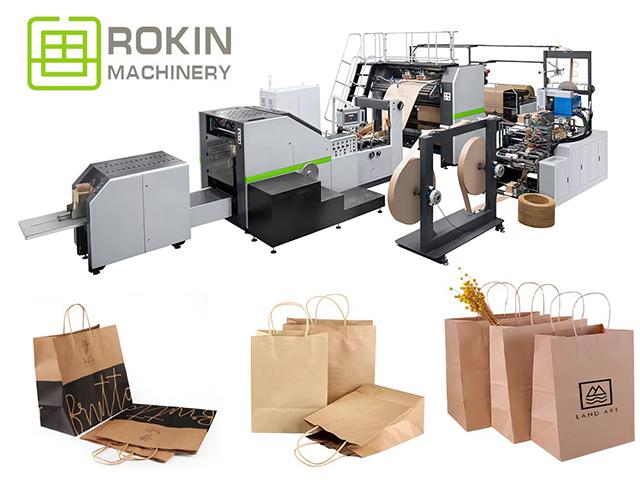
Paper Bags with Handles may look simple, yet the wrong choice can cause torn handles and unhappy customers. In this article, you will learn how to choose the right options by comparing handle types, material strength, and costs, while also seeing how Wenzhou Rokin Machinery CO. Ltd. supports consistent, scalable production using its paper bag making machine series that integrates side gluing, folding, paper cutting, bottom forming, and bag output in one efficient process.
Why Handle Design Matters When Choosing Paper Bags with Handles
How Handles Affect Load Capacity and Comfort
Handles are often the weakest point in paper bags. Even when the bag body appears strong, poorly designed or weak handles may tear under uneven or heavy loads. From the customer’s perspective, comfort also matters. Thin or stiff handles can dig into hands, making the carrying experience unpleasant.
For businesses, handle failure creates immediate brand damage. A bag breaking during transport reflects poorly on the store, regardless of product quality. This makes handle design just as important as paper thickness when evaluating paper bags with handles.
The Role of Handles in Customer Experience
Handles directly shape how customers interact with packaging after purchase. Bags with sturdy, comfortable handles are more likely to be reused, extending brand visibility beyond the store. In contrast, uncomfortable or unreliable handles reduce perceived value and shorten the bag’s usable life.
In fashion, gifting, and specialty retail, handle appearance also plays a visual role. Some handle styles communicate premium quality, while others emphasize practicality and efficiency. Matching handle design to customer expectations becomes a strategic branding choice.
Handle Strength vs Bag Body Strength
Many businesses focus heavily on paper thickness but overlook handle reinforcement. Even thick kraft paper will fail if handle attachment points are weak. Reinforcement patches, adhesive quality, and handle positioning are essential for reliable performance.
Why Handle Choice Often Determines Customer Satisfaction
Customer complaints about paper bags usually involve handles rather than paper quality. Handle tearing or discomfort is the most common failure. In real use, handle design often determines whether paper bags with handles succeed or fail.
Notes:
Handle performance should always be tested under real load conditions, not just visual inspection.
Types of Paper Bags with Handles and Their Best Uses
Choosing the right paper bags with handles is critical for businesses to ensure the right balance between durability, cost, and customer expectations. Different handle designs suit various products and use cases, and selecting the wrong one can result in higher replacement costs and dissatisfaction.
Twist Handle Paper Bags for Everyday Retail and Grocery
Twist handle paper bags are widely used in retail and grocery stores. Made by twisting paper fibers into rope-like strands, these bags offer strength and flexibility. They perform well for moderate loads and frequent use, making them suitable for a range of products in supermarkets, pharmacies, and general retail. These bags are machine-produced, offering cost-effective and stable quality for high-demand businesses.
Flat Handle Paper Bags for Food Service and High-Volume Use
Flat handle paper bags are common in food service and takeaway environments. Their simple design allows them to stack efficiently, saving space. While not ideal for heavy loads, they are cost-effective and suitable for short-distance transport. These bags are great for high-volume operations where efficiency matters more than premium appearance.
Die-Cut Handle Paper Bags for Lightweight or Promotional Needs
Die-cut handle paper bags have handle openings punched directly into the bag body. They are commonly used for lightweight products, promotional events, or quick retail transactions. These bags are cost-effective, offer a clean appearance, and perform well when simplicity and aesthetics are key, though they are not suitable for heavy loads.
Rope or Ribbon Handle Paper Bags for Premium Packaging
Rope and ribbon handle paper bags are high-end packaging solutions for luxury goods and gifts. They provide higher load capacity and improved comfort, making them suitable for heavier products and longer carrying distances. However, these bags come at a higher cost due to the materials and labor involved, making them ideal for premium packaging rather than high-volume use.
How Handle Construction Impacts Durability and Cost
The complexity of the handle design affects both durability and cost. Simpler handles reduce production expenses but may not support heavy loads, while more complex handles improve strength and comfort but increase manufacturing complexity. Businesses must weigh durability against cost when making their selection.
Matching Handle Type to Product Weight and Use Frequency
For lightweight products and short carrying distances, simple handle types like flat handles work well. For heavier items or frequent reuse, stronger handles, such as rope or twist handles, are essential to prevent tearing and ensure customer satisfaction.
No Single Handle Type Fits Every Business Scenario
There is no one-size-fits-all solution. The best paper bags with handles depend on factors like product weight, customer expectations, and operational needs.
Comparison Table: Handle Types and Business Use Cases
Handle Type | Typical Use Case | Load Capacity | Cost Level | Storage Efficiency |
Flat Handle | Food service, takeaway | Low–Medium | Low | High |
Twist Handle | Retail, grocery | Medium | Medium | Medium |
Die-Cut Handle | Promotions, light retail | Low | Low | High |
Rope/Ribbon Handle | Luxury, gifting | High | High | Low |
Material Choices That Impact Paper Bags with Handles Performance
Kraft Paper vs Coated Paper
Kraft paper is durable, eco-friendly, and works well for moderate loads. It’s ideal for businesses focused on sustainability. Coated paper, while offering better print quality and moisture resistance, may reduce recyclability and adds to the cost. Businesses need to balance aesthetics and environmental impact.
Paper Thickness and GSM Considerations
Paper thickness (measured in GSM) determines load capacity. 80-100 GSM is ideal for lightweight items, while 120-150 GSM suits medium-weight products. For heavy items, 180-250 GSM provides durability. However, overspecifying GSM increases costs without added benefit, so choose based on product needs.
Reinforcement Around Handles and Bottoms
Reinforcing the handle attachment points and bottom of the bag improves durability. Bags with twist handles or rope handles benefit from additional patches to prevent tearing. Reinforced bottoms help maintain bag shape and prevent collapse, especially for heavier or bulkier items.
Why Material Choice Must Align with Handle Design
The material and handle design must work together for reliable performance. Strong handles like rope or twist handles need durable, reinforced paper to prevent failure. Lighter handles like flat or die-cut handles can be used with thinner paper for lighter loads.
How to Decide Which Paper Bags with Handles Your Business Should Carry
When selecting the right paper bags with handles for business use, the decision is not as simple as just opting for the cheapest option. It's essential to align your choice with your product’s specific needs, customer expectations, and long-term business goals. Let’s dive deeper into the key considerations for making the best selection for your business.
Evaluating Product and Transport Needs
The type of paper bag with handles you choose should align with the weight, shape, and handling requirements of your products. Product weight is the most critical factor in determining the bag’s structural strength. If your business deals with heavier items like books, electronics, or groceries, a stronger handle and thicker paper are essential to prevent tearing during transport.
Product shape also influences the type of paper bag you should choose. Bulky items may require gusseted bags that expand to hold more, while smaller, flat products are better suited to simple flat-handle or die-cut paper bags.
The carrying distance of your customers is another important factor. If customers typically carry their items over short distances, a basic twist-handle paper bag might suffice. However, if your customers need to carry items over longer distances or if the bags will be reused repeatedly, stronger handles such as rope or ribbon styles may be more appropriate for long-term use.
Aligning Bag Choice with Target Customers
Different customer groups have different expectations when it comes to packaging. Premium customers who purchase luxury goods or specialty products expect premium packaging, and paper bags with handles that reflect this high quality are essential. For these customers, the type of handle and material used should communicate both style and strength. Rope and ribbon handle bags are ideal for premium products due to their durability, luxury feel, and presentation.
On the other hand, high-volume customers—such as those in the food service or grocery industries—value efficiency and cost-effectiveness over luxury appeal. For these businesses, flat-handle paper bags are a practical choice. They are easy to produce in bulk, cost-efficient, and functional for lighter, everyday use. They also stack neatly for easy storage and are well-suited for fast-paced environments.
Short-Term Cost vs Long-Term Efficiency
When it comes to paper bags with handles, it’s easy to focus solely on the initial cost of the bags. However, choosing a lower-cost option without considering the long-term consequences can lead to higher replacement rates, customer dissatisfaction, and additional operational costs. Higher-quality bags, such as twist-handle or rope-handle paper bags, may have a higher upfront cost, but they typically last longer, reducing the need for constant replacement. Additionally, they improve customer satisfaction by offering a more durable and comfortable carrying experience.
While low-cost options like flat-handle paper bags might initially seem more affordable, they may not withstand repeated use, especially in high-volume or heavier load environments. Investing in quality now can save your business money in the long run by reducing the frequency of bag replacements, lowering customer complaints, and enhancing overall brand perception.
A Practical Decision Checklist
Before selecting the best paper bags with handles for business use, evaluate the following key factors:
1. Product Needs – Assess the weight, shape, and transport distance of your products to choose an appropriately sized and durable bag.
2. Customer Expectations – Consider whether your customers expect premium packaging or if they are more focused on practicality and cost-effectiveness.
3. Storage Limits – Ensure that the selected paper bag type fits within your business’s storage capacity and is stackable to optimize space.
4. Sustainability Goals – Look for paper bags made from recycled or sustainably sourced materials that align with your business’s sustainability commitments.
5. Total Ownership Cost – Factor in the initial cost of the bags along with their durability, maintenance, and replacement costs. The goal is to balance cost with long-term efficiency.
By carefully evaluating these factors, you can make a well-informed decision about which paper bags with handles are the best fit for your business.
Conclusion
Choosing the right paper bags with handles is a strategic business decision. Handle design, paper choice, cost control, branding, and sustainability must align with real daily use.
To meet those needs at scale, Wenzhou Rokin Machinery CO. Ltd. offers a paper bag making machine series for medium to large bags with round handles, widely used for shopping and food bags. Its line integrates side gluing, roll folding, roll paper cutting, bottom folding, bottom gluing, bottom forming, and bag output in one streamlined process, helping businesses run efficiently and cut labor costs.
FAQ
Q: What are Paper Bags with Handles used for?
A: Paper Bags with Handles for business use suit retail, food service, and gifting needs.
Q: Why choose Paper Bags with Handles instead of plastic?
A: Paper Bags with Handles offer better branding and sustainability for business use.
Q: How do I choose Paper Bags with Handles for business use?
A: Match Paper Bags with Handles to product weight, distance, and customer expectations.
Q: Are Paper Bags with Handles more expensive?
A: Paper Bags with Handles cost more upfront but reduce damage for business use.
Q: What problems occur with Paper Bags with Handles?
A: Paper Bags with Handles fail when handles or materials mismatch business use.

