Introduction
The debate over paper vs plastic bags has sparked environmental discussions for years. Many assume paper bags are the eco-friendly option, but the truth is more complicated.
In this article, we will examine the environmental costs and production processes of both paper and plastic bags. By the end, you'll better understand which option is truly more sustainable.
The Environmental Impact of Paper and Plastic Bags
Carbon Footprint: Which Bag Is More Resource-Intensive?
When considering the carbon footprint of paper vs plastic bags, the production process plays a significant role.
● Paper Bags: Manufacturing paper bags requires more energy than plastic, leading to higher carbon emissions. The process involves cutting down trees, processing wood pulp, and using chemicals, all of which contribute to a larger carbon footprint. However, paper bags are biodegradable, which reduces their long-term environmental impact compared to plastic.
● Plastic Bags: While plastic bags require less energy to produce, they come with a persistent environmental footprint. Plastic bags are non-biodegradable, meaning they remain in the environment for hundreds of years, contributing to long-term pollution. Despite requiring fewer resources in production, their lasting impact is a major environmental concern.
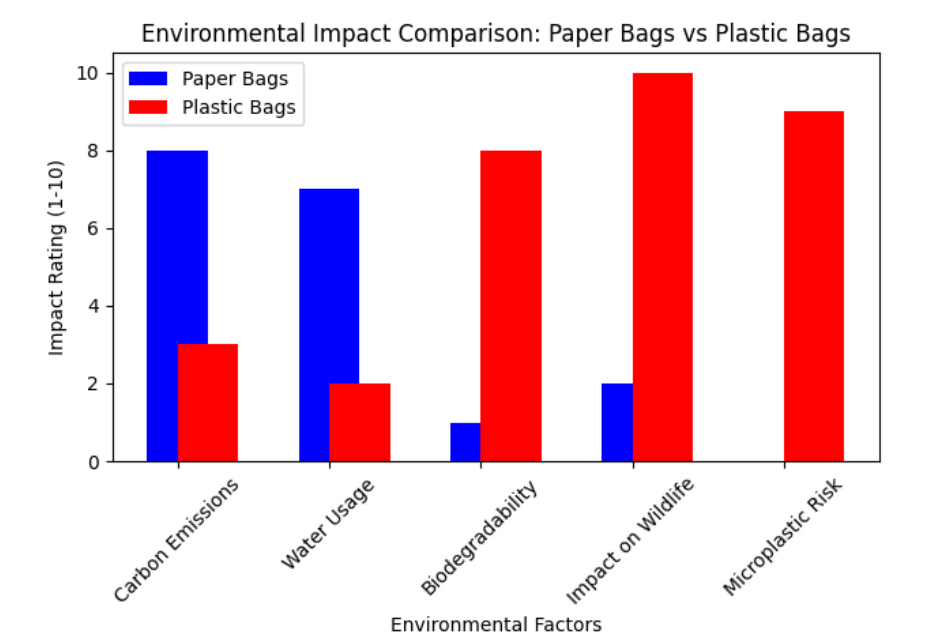
Factor | Paper Bags | Plastic Bags |
Carbon Emissions | Higher due to energy-intensive production | Lower, but contributes to long-term pollution |
Water Usage | High; uses several times more water | Low; minimal water consumption |
Biodegradability | Biodegradable and breaks down naturally | Non-biodegradable; can last for centuries |
Impact on Wildlife | Minimal harm; decomposes quickly | Significant harm; often ingested by wildlife |
Microplastic Risk | None | High; contributes to microplastic pollution |
Water Usage and Pollution: The Hidden Costs
Another crucial environmental factor is water usage and the potential for water pollution.
● Paper Bags: The production of paper bags consumes significant amounts of water—several times more than plastic bags. This heavy water usage places a strain on water resources, particularly in areas where water scarcity is a concern. Additionally, the runoff from paper mills can introduce pollutants into local waterways.
● Plastic Bags: Plastic bags require much less water to produce, making them a more water-efficient option. However, plastic bags, particularly microplastics, can end up in waterways, contaminating water quality and harming aquatic ecosystems.
Waste and Decomposition: How Long Do They Last?
How long each type of bag lasts and how it decomposes is another important factor in their environmental impact.
● Paper Bags: Paper bags are biodegradable and break down relatively quickly when exposed to the elements. However, improper disposal, such as in landfills without proper conditions, can delay decomposition. If not recycled or composted, paper bags still contribute to waste.
● Plastic Bags: Plastic bags, on the other hand, can take hundreds of years to decompose. When they do break down, they fragment into harmful microplastics, which persist in the environment and cause long-lasting damage to ecosystems.
Production Process: Manufacturing Paper vs Plastic Bags
Energy Consumption in Manufacturing
The energy consumption required to produce each type of bag significantly affects its environmental footprint.
● Paper Bags: Paper bags are more energy-intensive to produce, requiring a significant amount of energy to process the raw materials and produce the finished product. This high energy demand contributes to greater carbon emissions during manufacturing.
● Plastic Bags: Plastic bags require less energy to produce, as the process involves the extraction and processing of petroleum, which is less energy-intensive than the production of paper. However, this advantage is offset by the long-term environmental consequences of plastic waste.
Resource Use: Wood vs Petroleum
The raw materials used for production contribute to the environmental impact of both paper and plastic bags.
● Paper Bags: Paper bags are made from wood, a renewable resource. However, unsustainable logging practices contribute to deforestation and biodiversity loss. Without responsible forestry management, the production of paper bags can exacerbate environmental degradation.
● Plastic Bags: Plastic bags are derived from petroleum, a non-renewable resource. While their production does not directly affect forests, it contributes to the depletion of fossil fuels and results in environmental damage due to the extraction and refining processes.
Transportation Costs: Weight and Efficiency
The weight of each bag type also affects its environmental cost, particularly in transportation.
● Paper Bags: Paper bags are much heavier than plastic bags, meaning more trucks are needed to transport the same number of bags. This increases transportation costs and results in higher carbon emissions during distribution.
● Plastic Bags: Plastic bags are lighter and more compact, making them cheaper to transport. This reduces transportation-related carbon emissions, contributing to their lower overall environmental impact.
Reusability and Recycling: Can They Be Repurposed?
Recycling Efficiency
Recycling efficiency is an important consideration in determining the sustainability of each bag.
● Paper Bags: Paper bags can be recycled efficiently, though the process can be energy-intensive. They can be repurposed into new paper products, but they must be clean and free from contaminants like food or grease to be effectively recycled.
● Plastic Bags: Plastic bags are more difficult to recycle due to their lightweight nature and tendency to tangle in machinery. Specialized collection points are often required for plastic bag recycling, making it less accessible to the general public.
Reusability: How Many Times Can They Be Used?
Both paper and plastic bags can be reused, but their durability affects how often they can be repurposed.
● Paper Bags: Paper bags can be reused, but their lifespan is typically shorter than that of plastic bags. They are prone to tearing, especially when wet or carrying heavy items.
● Plastic Bags: Plastic bags are more durable and flexible, making them easier to reuse. However, they can lose strength over time with repeated use, especially if exposed to wear and tear.
Bag Type | Reusability | Durability | Lifespan |
Paper Bags | Can be reused 2-3 times | Tends to tear easily, especially when wet or carrying heavy items | Shorter lifespan, especially under wet conditions |
Plastic Bags | Can be reused many times | More durable, resistant to tears, but becomes weak over time | Longer lifespan with repeated use, but deteriorates over time |
The Impact on Wildlife and Ecosystems
The Harm of Plastic Bag Pollution
Plastic bags have a significant negative impact on wildlife and ecosystems.
● Paper Bags: Paper bags pose little risk to wildlife after disposal. They break down naturally and do not leave harmful residues that could threaten animals.
● Plastic Bags: Plastic bags, however, are often mistaken for food by marine animals, leading to ingestion or entanglement. These bags can cause injury or death to wildlife and contribute to pollution in oceans and waterways.
The Problem of Microplastics
Microplastics are a growing concern due to their long-lasting environmental effects.
● Paper Bags: Paper bags do not contribute to the microplastic issue. They decompose naturally without leaving behind harmful residues.
● Plastic Bags: As plastic bags degrade, they break down into microplastics that persist in the environment, contaminating oceans, rivers, and soil. This pollution poses a serious threat to wildlife and ecosystems.
Economic Considerations: Cost and Production Efficiency
Manufacturing Costs: Which Is More Affordable?
Cost is an important factor for businesses when choosing between paper and plastic bags.
● Paper Bags: Paper bags are more expensive to produce due to the energy and raw materials required for their manufacture. They are heavier, which increases transportation costs as well.
● Plastic Bags: Plastic bags are cheaper to produce in bulk, making them a more cost-effective option for businesses. However, the environmental impact of plastic bags may outweigh their lower production costs in the long run.
The Economic Impact of Waste Management
Waste management costs are also an important consideration when evaluating the environmental impact of paper and plastic bags.
● Paper Bags: Paper bags are easier to recycle and decompose naturally. However, due to their shorter lifespan and heavier weight, they still generate significant waste.
● Plastic Bags: Plastic bags often end up in landfills or as litter, requiring costly waste management efforts. The environmental cleanup costs associated with plastic bags are substantial and increasing as plastic pollution becomes a larger problem.
Which Bag Is Truly Better?
Summary of Environmental Impacts
● Paper Bags: While paper bags have a higher carbon footprint and require more resources to produce, they are biodegradable and can be recycled. They contribute less long-term environmental damage compared to plastic bags, particularly when properly disposed of or recycled.
● Plastic Bags: Plastic bags require fewer resources to produce but contribute to long-term pollution due to their non-biodegradable nature and harmful effects on wildlife. They are more resource-efficient in manufacturing but come with a significant environmental toll in terms of waste.
What Should Consumers Choose?
The best choice depends on context. For short-term use, paper bags may be the better option due to their biodegradability. However, in the long run, reducing single-use packaging and opting for more sustainable alternatives is the best approach to minimizing environmental impact.
Conclusion
Neither paper nor plastic bags are ideal from an environmental perspective. Reducing the consumption of single-use packaging and opting for recycled materials is key to minimizing environmental harm. Understanding the full lifecycle of both paper and plastic bags helps in making more informed decisions. For businesses aiming to reduce their environmental footprint, Wenzhou Rokin Machinery CO. Ltd. offers advanced machinery for producing eco-friendly bags, promoting more responsible packaging solutions.
FAQ
Q: What are the environmental benefits of Paper Bags?
A: Paper bags are biodegradable and recyclable, which makes them less harmful to the environment compared to plastic bags. They break down quickly and contribute less to long-term pollution.
Q: How are Paper Bags made?
A: Paper bags are made by processing wood pulp into paper, which is then shaped and formed into bags. This process requires more energy and water than plastic bag production but results in a biodegradable product.
Q: Which is more eco-friendly: Paper Bags or Plastic Bags?
A: Paper bags are more eco-friendly in terms of biodegradability and recyclability. However, their production consumes more resources, like energy and water, than plastic bags, making the comparison complex.
Q: Why are Paper Bags considered better than plastic?
A: Paper bags are considered better because they are biodegradable, recyclable, and decompose faster in the environment compared to plastic bags, which can persist for hundreds of years.
Q: How many times can Paper Bags be reused?
A: Paper bags can be reused multiple times, though their durability is limited compared to plastic. They tend to tear more easily, especially when wet or carrying heavy items.
Q: Are Paper Bags more expensive than Plastic Bags?
A: Yes, Paper bags tend to be more expensive than plastic bags due to the higher costs involved in manufacturing and materials. However, their environmental benefits may outweigh the additional costs for many consumers and businesses.
Q: Can Paper Bags be recycled?
A: Yes, Paper bags can be recycled, but they must be free from food or grease contamination for effective recycling. Recycled paper bags are often repurposed into new paper products.

