Introduction
Paper bags have become a symbol of sustainability and eco-conscious consumption. As plastic bans and green initiatives spread globally, manufacturers are turning to paper bag making machines to meet the surging demand for biodegradable packaging. But what fuels this production revolution? The heart of paper bag manufacturing lies in its raw materials — the specific fibers, coatings, and adhesives that determine strength, appearance, and environmental impact. Understanding these materials is essential for anyone involved in packaging production, from entrepreneurs to engineers optimizing machine efficiency.
The Foundation: Types of Paper Used in Paper Bag Production
The primary raw material for any paper bag is, naturally, paper itself. However, not all paper is created equal. The type of paper used determines the bag’s texture, strength, print quality, and recyclability.
Common Paper Types Used in Paper Bag Making
| Type of Paper | Description | Common Use | Strength/Quality |
| Kraft Paper | Made from virgin wood pulp; strong and coarse | Grocery bags, industrial packaging | Very high |
| Recycled Paper | Derived from used paper products | Shopping bags, promotional bags | Moderate |
| White Paper | Bleached kraft paper for printing and branding | Luxury retail bags | Medium to high |
| Art Paper | Coated for glossy finish | Boutique and gift bags | Moderate |
| Newsprint | Recycled, inexpensive | Lightweight carry bags | Low |
Among these, kraft paper dominates the market because of its exceptional durability and compatibility with automatic paper bag-making machines. The machine can process kraft rolls smoothly, reducing tear risks and ensuring consistent folding and gluing.
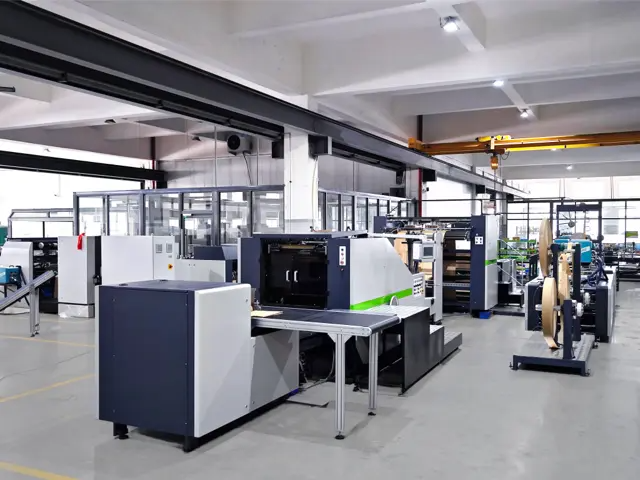
The Role of Pulp: The Building Block of Paper Bags
Pulp serves as the foundational ingredient in paper production. It’s a fibrous material obtained by mechanically or chemically processing raw plant matter.
Types of Pulp Used
Wood Pulp – Derived from softwood and hardwood trees. Softwoods (like pine) add strength, while hardwoods (like birch) improve smoothness.
Recycled Pulp – Sourced from old newspapers, used cardboard, or discarded paper. It’s eco-friendly but slightly weaker.
Non-Wood Pulp – Created from bamboo, sugarcane bagasse, straw, and jute — a sustainable choice gaining traction in modern paper bag making machines.
| Pulp Type | Source Material | Key Benefit | Sustainability Rating |
| Softwood | Pine, spruce | High tensile strength | Moderate |
| Hardwood | Birch, eucalyptus | Smooth surface | Moderate |
| Bagasse | Sugarcane residue | Renewable, low-cost | High |
| Bamboo | Grass fiber | Fast-growing resource | High |
| Recycled Paper | Mixed waste | Energy efficient | Very high |
The type of pulp directly affects how well the paper bag making machine handles the paper web — influencing tension control, cutting precision, and the bag’s final tear resistance.
Additives and Chemicals That Enhance Paper Quality
Paper alone cannot meet all functional requirements. Additives play a crucial role in improving performance, printability, and machine compatibility.
Essential Additives
Sizing Agents (Rosin, Alum, or Synthetic Resins): Control paper’s absorbency to make it less permeable to liquids and ink.
Fillers (Clay, Calcium Carbonate): Improve brightness and surface smoothness for branding and printing.
Strength Enhancers (Starch, Polyacrylamide): Increase internal bonding for higher burst and tensile strength.
Colorants and Dyes: Offer branding flexibility, especially for retail or promotional bags.
Without proper chemical treatment, even premium kraft paper may tear or lose shape during the high-speed folding process of a paper bag making machine. The additives ensure dimensional stability, enabling efficient gluing and sealing.
Adhesives: The Invisible Force Behind Every Paper Bag
While paper forms the body, adhesives are the unseen elements that hold it all together. They play a vital role in bonding handles, seams, and gussets.
Common Adhesive Types:
Water-Based Adhesives (PVA, Dextrin): Non-toxic, fast-drying, and compatible with automatic paper bag making machines.
Hot-Melt Adhesives: Provide stronger and quicker bonding but require specific temperature control.
Natural Starch Adhesives: Eco-friendly and commonly used in recyclable paper bags.
Comparison of Adhesives
| Adhesive Type | Base Material | Drying Speed | Eco-Friendliness | Typical Use |
| PVA Glue | Polyvinyl acetate | Fast | High | Seam bonding |
| Dextrin | Starch-based | Moderate | Very high | Lightweight bags |
| Hot-Melt | Synthetic resin | Very fast | Medium | Heavy-duty handles |
Modern paper bag making machines feature automatic adhesive application systems to ensure uniform coating and reduce material waste — a key factor in large-scale, high-efficiency production.
Handles and Reinforcements: Materials for Strength and Aesthetics
Handles significantly impact both the usability and appearance of paper bags. The type of handle material chosen must balance strength, comfort, and cost.
Common Handle Materials
Twisted Paper Cord: Made from rolled kraft strips; completely recyclable.
Flat Paper Handles: Ideal for automated attachment in high-speed paper bag making machines.
Cotton or Jute Cord: Used for premium bags; provides a luxury finish.
Nylon and Polyester Strings: Used less frequently today due to sustainability concerns.
To enhance durability, manufacturers often reinforce the handle area with cardboard patches or thicker kraft layers. These reinforcements must be compatible with the adhesive system and folding mechanism of the machine.
Eco-Friendly Coatings and Laminations
Coatings protect paper bags from moisture, grease, and wear. However, traditional plastic laminations hinder recyclability. Hence, the shift toward eco-friendly coatings is one of the most significant innovations in paper bag manufacturing.
Types of Coatings:
Water-Based Barrier Coatings: Provide grease and moisture resistance without affecting recyclability.
PLA (Polylactic Acid) Coatings: Derived from corn starch; fully compostable.
Wax Coatings: Used for food packaging bags to prevent leakage.
UV Coatings: Enhance visual appeal for luxury packaging.
Manufacturers must ensure that the chosen coating does not interfere with folding or gluing in the paper bag making machine, as overly thick coatings can cause jamming or adhesion failures.
Sustainable Sourcing and Waste Utilization in Paper Bag Production
The sustainability of a paper bag does not rely only on its recyclability — it begins with how raw materials are sourced. Leading producers now emphasize FSC-certified wood, recycled pulp, and energy-efficient production lines.
Sustainable Practices in Material Sourcing
Closed-Loop Pulping: Recycles wastewater and chemicals in the pulping process.
Use of Agricultural Residues: Bagasse and wheat straw reduce dependence on forests.
Machine Optimization: Energy-efficient paper bag making machines lower electricity and adhesive waste.
Biodegradable Additives: Replace petroleum-based chemicals with plant-derived alternatives.
Such eco-initiatives not only reduce carbon footprint but also appeal to environmentally conscious consumers, giving brands a competitive advantage in the green marketplace.
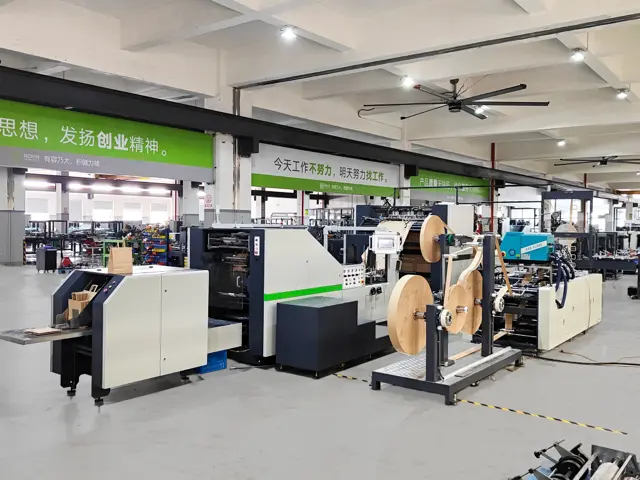
The Interplay Between Raw Materials and Paper Bag Making Machines
The performance of a paper bag making machine is deeply connected to the quality of the raw materials it processes. Poor-quality paper or inconsistent adhesives can cause production inefficiencies, misfolds, or rejections.
Key Compatibility Considerations:
Paper GSM (Grams per Square Meter): Heavier papers require higher cutting torque and stronger adhesive bonding.
Moisture Content: Excess humidity can warp paper rolls, affecting alignment and gluing precision.
Surface Finish: Rough surfaces may reduce print clarity; overly smooth ones might slip during feeding.
Coating Type: Non-stick coatings must still allow adhesive grip for structural integrity.
Choosing high-grade, machine-compatible raw materials ensures seamless operation, minimal downtime, and uniform product quality — all vital for scaling paper bag production profitably.
Conclusion
The process of paper bag manufacturing goes far beyond simply feeding paper into a machine. It’s a sophisticated interplay of raw materials — from pulp and paper to coatings, adhesives, and handles — all optimized for performance, sustainability, and aesthetics. The right combination not only ensures strong, attractive, and eco-friendly bags but also maximizes the output of modern paper bag making machines. As global demand for green packaging accelerates, innovation in raw materials will continue to define the efficiency, profitability, and environmental impact of paper bag production.
FAQ
1. What is the best paper for making paper bags?
Kraft paper is the most preferred due to its superior strength, recyclability, and compatibility with automatic paper bag making machines.
2. Can recycled paper be used for paper bag production?
Yes. Recycled paper is widely used, although it may offer slightly lower strength compared to virgin kraft paper. It’s ideal for lightweight or promotional bags.
3. What eco-friendly alternatives exist to plastic coatings?
Water-based and PLA coatings are sustainable options that maintain barrier properties without compromising recyclability.
4. How does a paper bag making machine affect raw material choice?
Machine speed, glue system, and cutting precision require materials with consistent thickness, proper moisture levels, and smooth surfaces for optimal output.
5. Are paper bag adhesives environmentally safe?
Modern adhesives, such as water-based PVA and starch-based glues, are biodegradable and safe for food-grade applications.

