Introduction
Paper bag production has become a crucial part of modern sustainable packaging. As consumer and regulatory demand for eco-friendly solutions grows, manufacturers face an ongoing challenge: how to maintain product quality while controlling production costs. The solution lies in strategic optimization across materials, machinery, labor, and process management. For producers investing in a paper bag making machine, understanding how to balance these variables is key to building a profitable and competitive operation.
Understanding the True Cost of Paper Bag Production
Balancing cost and quality begins with understanding where money flows in the production cycle. Each stage—raw material procurement, machine setup, printing, finishing, and logistics—affects both cost and the final product’s quality.
| Cost Component | Description | Impact on Quality |
| Raw Materials | Kraft paper, recycled paper, adhesives | Determines bag strength, texture, and appearance |
| Machinery | Type and efficiency of the paper bag making machine | Affects precision, waste rate, and output consistency |
| Labor & Training | Skilled operators and maintenance staff | Impacts downtime and defect rates |
| Printing & Finishing | Ink quality, coating, embossing | Enhances visual appeal and brand value |
| Logistics & Energy | Power use, packaging, shipping | Influences overall cost-effectiveness |
A detailed cost audit helps identify where optimization can occur without sacrificing the integrity of the product. In most cases, machinery and raw materials represent over 60% of total production costs—making them the primary levers for strategic improvement.
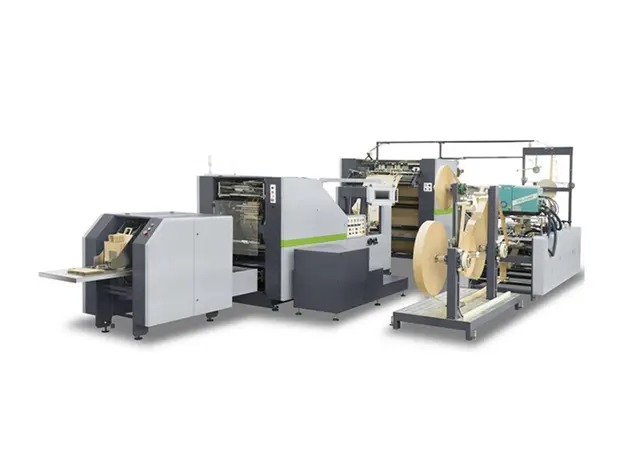
Choosing the Right Paper Bag Making Machine for Efficiency
Selecting the ideal paper bag making machine is one of the most powerful ways to align quality and cost objectives. Machines vary in automation level, production capacity, and adaptability to different paper grades.
| Machine Type | Output Speed | Paper Compatibility | Ideal For |
| Fully Automatic | 150–400 bags/min | Kraft, coated, laminated | High-volume commercial use |
| Semi-Automatic | 60–120 bags/min | Recycled, kraft | Small to medium enterprises |
| Manual | 10–30 bags/min | Basic kraft | Niche or artisanal production |
An advanced automatic machine may seem expensive upfront, but its efficiency, waste reduction, and labor savings often lead to a lower cost per unit over time. Additionally, newer models come with precision sensors and servo motors that minimize paper wastage—maintaining consistent bag quality even at high speeds.
When evaluating machines, consider:
Production volume: Align capacity with current and projected demand.
Material flexibility: The ability to process recycled or coated papers expands market options.
Maintenance needs: Simpler maintenance reduces downtime and hidden costs.
Energy consumption: Energy-efficient systems cut operating expenses significantly.
Selecting the Optimal Paper Material
Material choice is the foundation of both cost and quality. Kraft paper remains the industry standard due to its strength, printability, and biodegradability. However, the thickness, coating, and source of paper directly influence the total cost.
| Paper Type | Cost Level | Key Features | Ideal Use |
| Virgin Kraft | High | Durable, premium finish | Luxury or heavy-duty bags |
| Recycled Kraft | Medium | Eco-friendly, cost-effective | Retail or promotional bags |
| White Bleached Kraft | High | Excellent for branding and printing | Boutique or gift packaging |
| Coated/Laminated Paper | High | Moisture resistance, glossy finish | Food delivery and beverages |
The right strategy involves matching paper quality with intended use. For example, luxury retailers prioritize finish and strength, while food-service providers may prioritize grease resistance and cost efficiency. Using a paper bag making machine that can handle multiple paper types allows manufacturers to diversify their product line without increasing equipment investment.
Implementing Process Optimization for Consistency
Even with quality materials and machinery, inefficiencies in process flow can inflate costs. Process optimization ensures consistent quality output and reduces waste.
Key optimization tactics include:
Automated feeding systems to minimize paper misalignment.
In-line quality control sensors that detect thickness or adhesion errors in real-time.
Standardized machine calibration routines to maintain consistent bag size and shape.
Predictive maintenance powered by data analytics to prevent unplanned downtime.
For instance, adjusting machine speed and tension according to paper thickness can improve fold accuracy while reducing tear rates. When integrated with a modern paper bag making machine, these optimizations create a closed-loop system that continuously monitors and refines production quality.
Balancing Labor Cost with Skilled Operation
Automation reduces labor dependency, but skilled operators remain essential to achieving top-quality results. An untrained operator may waste more paper, misuse adhesive ratios, or mishandle machine settings—all of which impact both cost and quality.
The best strategy combines automated systems with targeted operator training:
Train staff on calibration, troubleshooting, and preventive maintenance.
Rotate operators across different machine types to increase adaptability.
Implement incentive programs tied to efficiency and quality metrics.
Investing in people complements the efficiency of a paper bag making machine, ensuring that technology and human skill work together to minimize waste and maximize output.
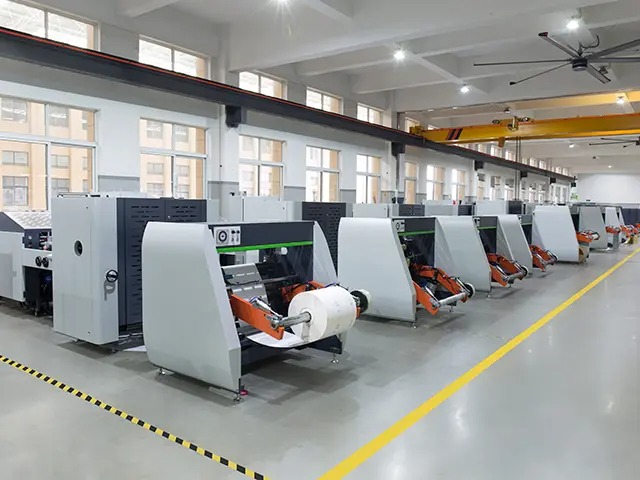
Integrating Quality Control at Every Stage
Quality control should not be an afterthought. The most cost-effective approach integrates quality assurance throughout the entire production line.
Key QC Practices:
Incoming Material Inspection: Check paper GSM (grams per square meter), moisture, and color consistency.
In-Process Monitoring: Use sensors on the paper bag making machine to track cutting accuracy and glue uniformity.
Post-Production Testing: Randomly test bag load capacity, print alignment, and adhesion strength.
By embedding QC checkpoints early and continuously, manufacturers avoid costly recalls or reworks. Moreover, consistent quality builds trust with clients, allowing for stable pricing and repeat orders—both critical for balancing cost and long-term profitability.
Leveraging Automation and Data Analytics
Modern paper bag making machines increasingly feature IoT integration and data tracking capabilities. Real-time analytics can help producers monitor performance, identify inefficiencies, and predict maintenance needs.
Benefits of Data-Driven Production:
Reduced downtime through predictive maintenance alerts.
Lower material waste via data on paper consumption rates.
Consistent quality thanks to auto-adjustment mechanisms.
Energy optimization through tracking and load balancing.
For example, by analyzing production data, a manufacturer might discover that a small speed reduction cuts paper tearing by 15%, improving overall yield. Over thousands of production cycles, such insights dramatically lower total costs while maintaining superior quality.
Sustainable Practices as a Cost-Quality Multiplier
Sustainability is no longer just an ethical choice—it’s a financial advantage. Using recycled materials, energy-efficient machines, and optimized waste management not only cuts costs but also enhances brand reputation.
Sustainability strategies include:
Recycling paper trims back into the production process.
Using water-based inks and adhesives to reduce chemical costs.
Adopting solar or renewable power sources for machine operations.
Certifying materials (FSC, ISO 14001) to justify premium pricing.
Modern paper bag making machines designed for low energy consumption and minimal waste align perfectly with eco-conscious production goals. The result is a long-term balance between cost savings, quality output, and environmental responsibility.
Conclusion
Balancing cost and quality in paper bag production is a strategic process that blends smart investments, efficient machinery, skilled labor, and data-driven control. The paper bag making machine sits at the heart of this equation, influencing material usage, operational efficiency, and end-product consistency. By integrating modern automation, optimizing materials, and embedding sustainability, manufacturers can achieve a lasting competitive edge—delivering high-quality paper bags at the most economical rate possible.
FAQ
1. What factors most affect the cost of paper bag production?
Raw materials, machine efficiency, and energy consumption are the biggest cost drivers. Optimizing these factors can significantly reduce total expenses.
2. How can a paper bag making machine improve quality?
Advanced machines offer precise control, consistent cutting and folding, and automated error detection, ensuring uniform bag quality with minimal defects.
3. Is investing in an automatic paper bag making machine worth it?
Yes. While the initial cost is higher, automation leads to faster production, lower waste, and reduced labor expenses—delivering a better long-term ROI.
4. What’s the best paper type for cost-effective production?
Recycled kraft paper provides the best balance between affordability, strength, and sustainability, especially for retail and promotional bags.
5. How can sustainability reduce production costs?
By recycling waste materials, using renewable energy, and employing eco-efficient technologies, producers can lower operating expenses while meeting green standards.

