In today’s competitive packaging industry, the decision to invest in machinery goes beyond production capacity. Modern factories are seeking solutions that not only produce high-quality paper bags but also integrate into a broader business strategy, enhancing operational intelligence, cost management, and market responsiveness. An intelligent Paper Bag Making Machine represents a forward-looking investment, allowing factories to leverage automation, data analytics, and advanced control systems to optimize operations and future-proof their production lines. Rokin’s intelligent machines, with customizable configurations for flat, handle, and block-bottom bags, are designed to support these strategic goals, making them a critical choice for factories aiming to stay ahead in the market.
Data-Driven Production Management
Modern manufacturing increasingly relies on data for decision-making. Investing in an intelligent paper bag machine enables factories to track production metrics, analyze trends, and optimize processes.
Real-Time Production Analytics
Rokin intelligent machines are equipped with sensors and software that collect and display real-time data on machine performance, production speed, material usage, and defect rates. This information allows factory managers to identify inefficiencies, monitor production bottlenecks, and make informed decisions to improve throughput. For example, if a particular bag type consistently causes delays, the system can highlight this, allowing managers to adjust settings, train operators, or allocate resources more effectively. Over time, this data-driven approach reduces operational waste, increases output consistency, and allows management to forecast capacity requirements accurately, which is critical for meeting large client orders and scaling operations efficiently.
Predictive Insights for Maintenance
Intelligent machines provide predictive maintenance insights, reducing unexpected downtime and minimizing repair costs. Rokin machines track operational parameters and predict component wear before failures occur. Factory managers can schedule maintenance during low-demand periods, avoiding disruptions during peak production times. Predictive insights not only improve machine longevity but also reduce emergency repair expenses. By proactively addressing maintenance issues, factories can maintain consistent output, optimize workforce allocation, and extend the overall lifecycle of their investment, translating into higher return on investment over time.
Performance Benchmarking and Continuous Improvement
Intelligent machines allow factories to benchmark performance across shifts, production lines, and different machine models. Rokin systems record detailed metrics, enabling comparisons that reveal areas for improvement. For instance, managers can evaluate which settings optimize bag quality versus production speed, or determine the most efficient configurations for different paper types. Continuous monitoring and benchmarking encourage iterative improvements, helping factories refine processes, enhance quality control, and improve operational efficiency. This level of strategic insight is difficult to achieve with conventional or semi-automatic machines.
Cost Management and Strategic ROI
Investment in an intelligent machine is justified not only by production efficiency but also by its long-term financial impact. Strategic cost management is a key differentiator for factories using intelligent machines.
Reducing Operational Overheads
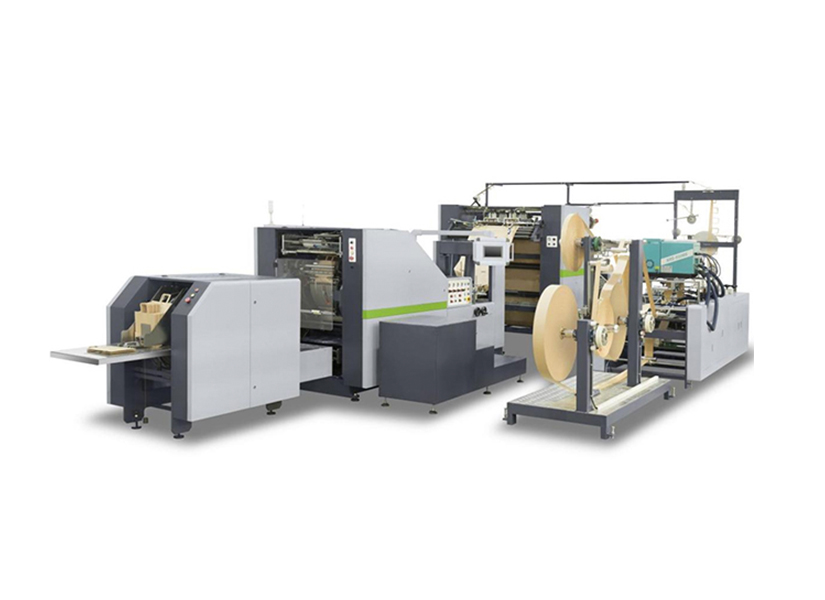
Automation significantly reduces labor dependency. With Rokin intelligent machines, fewer operators are required to oversee the entire production process, including feeding, cutting, folding, sealing, and handle attachment. Labor can be reallocated to quality supervision, logistics, or process optimization. Reduced labor costs combined with high throughput improves the cost per bag and overall operational efficiency. For factories producing tens of thousands of bags daily, these savings accumulate into substantial financial benefits. Intelligent management also helps identify and reduce energy consumption by adjusting machine speed and operational parameters according to production needs, further lowering operational overheads.
Optimizing Material Utilization
Material costs are a major expense in paper bag production. Rokin intelligent machines use precise cutting and feeding systems, minimizing paper waste. Real-time monitoring ensures adjustments are made instantly to prevent defective batches. Additionally, the machine’s ability to handle multiple paper types, thicknesses, and sizes without halting production reduces errors and material loss. Optimized material utilization directly contributes to a lower cost per bag and higher profitability, while supporting sustainability goals that are increasingly valued by clients and regulatory authorities.
Maximizing Production Flexibility and Profit Margins
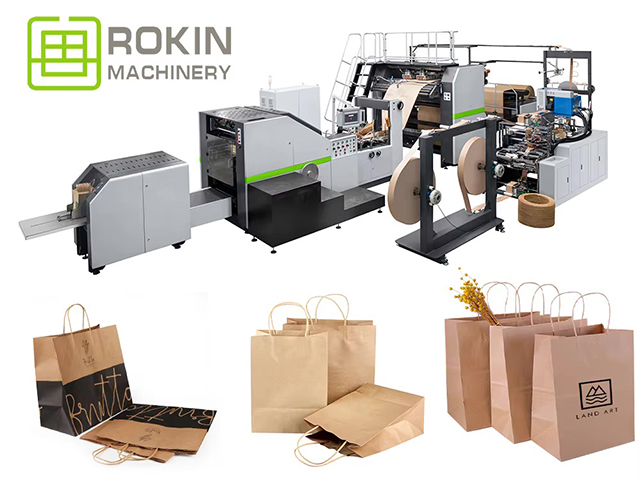
High-speed production alone is not enough; profitability comes from the ability to respond to varied client requirements. Intelligent machines allow rapid switching between bag types, sizes, and customization options, including printed logos or branded designs. Factories can fulfill multiple orders simultaneously without production delays. This flexibility enables businesses to charge premium prices for customized or branded products while keeping operational costs stable. In effect, intelligent machines increase both production capacity and profit margins, turning the machinery into a strategic revenue generator rather than a simple production tool.
Strategic Integration with Factory Operations
Investing in an intelligent machine is part of a broader strategy to modernize factory operations and enable smarter manufacturing practices.
Integration with Digital Factory Systems
Rokin intelligent machines can be integrated with factory management software, providing centralized control and visibility over the entire production line. Managers can schedule production runs, track inventory, monitor machine performance, and generate reports for strategic planning. Integration ensures that the production process aligns with overall business objectives, such as minimizing downtime, optimizing workforce allocation, and improving order fulfillment. A machine that communicates with broader factory systems creates a more cohesive and responsive operation, supporting strategic decision-making at all levels.
Supporting Sustainable Manufacturing Goals
Modern factories are under pressure to adopt sustainable practices. Intelligent paper bag machines support the use of recyclable and biodegradable materials, reduce waste through precise control, and allow monitoring of energy usage. Factories can generate data on sustainability metrics, which is valuable for compliance, corporate responsibility reporting, and marketing purposes. By aligning production efficiency with sustainability, factories improve brand reputation and meet the growing demand for environmentally responsible packaging solutions.
Enhancing Client and Market Responsiveness
Client expectations are evolving, and businesses must respond quickly to market trends. Intelligent machines enable factories to adjust production schedules, customize bag designs, and scale output in real time. Rokin machines’ data-driven features allow managers to anticipate bottlenecks, prioritize urgent orders, and maintain high-quality standards simultaneously. This responsiveness improves customer satisfaction, strengthens business relationships, and positions factories as reliable partners in the competitive packaging sector.
Future-Proofing Your Investment
Investing in intelligent machinery today is an investment in long-term competitiveness. Factories adopting Rokin intelligent machines position themselves to capitalize on emerging opportunities and technological advancements.
Scalable and Upgradeable Design
Rokin machines support modular upgrades, allowing factories to expand capabilities as production demands grow. Whether it’s integrating new bag types, increasing production speed, or adding automated printing, the machines can evolve without requiring complete replacement. This scalability ensures that the factory remains agile and adaptable in a market that is constantly changing, maximizing return on investment and reducing future capital expenditure.
Alignment with Industry 4.0 Trends
Intelligent paper bag machines fit into the broader Industry 4.0 movement, which emphasizes automation, connectivity, and data-driven decision-making. By investing in smart machinery, factories position themselves at the forefront of digital manufacturing, capable of implementing predictive analytics, remote monitoring, and integrated workflow management. This alignment with modern industry standards enhances competitiveness, attracts forward-looking clients, and prepares the factory for future operational challenges.
Long-Term Competitive Advantage
Factories that invest in intelligent machines gain a multi-dimensional advantage: higher production efficiency, better cost management, responsive customization, sustainable practices, and integration with digital systems. This combination of benefits strengthens market positioning, improves client satisfaction, and ensures that the factory can respond effectively to future trends and challenges. The investment in intelligent machinery is not just about producing bags—it’s about building a resilient, agile, and profitable business for the long term.
Conclusion
Investing in an intelligent Paper Bag Making Machine today is a strategic decision that extends far beyond immediate production benefits. Rokin machines enable factories to leverage data-driven insights, optimize operational costs, increase production flexibility, and support sustainability objectives. By integrating seamlessly with digital factory systems and adapting to changing market demands, intelligent machines position businesses for long-term growth, profitability, and competitiveness. For modern factories seeking a forward-looking solution, investing in an intelligent paper bag making machine is not just a choice—it is a critical step toward operational excellence and strategic success in the packaging industry.

